Food Processing Machine Maintenance: Simple Tips to Improve Machine Life and Performance
Adway Sawant · Sep 4, 2026
Food processing machines are an important part of daily production. Whether you operate a papad unit, flour mill, snack business, bakery or food-processing facility, regular machine maintenance helps keep production running smoothly.
Proper cleaning, inspection and timely servicing can help prevent avoidable problems and maintain consistent machine performance.
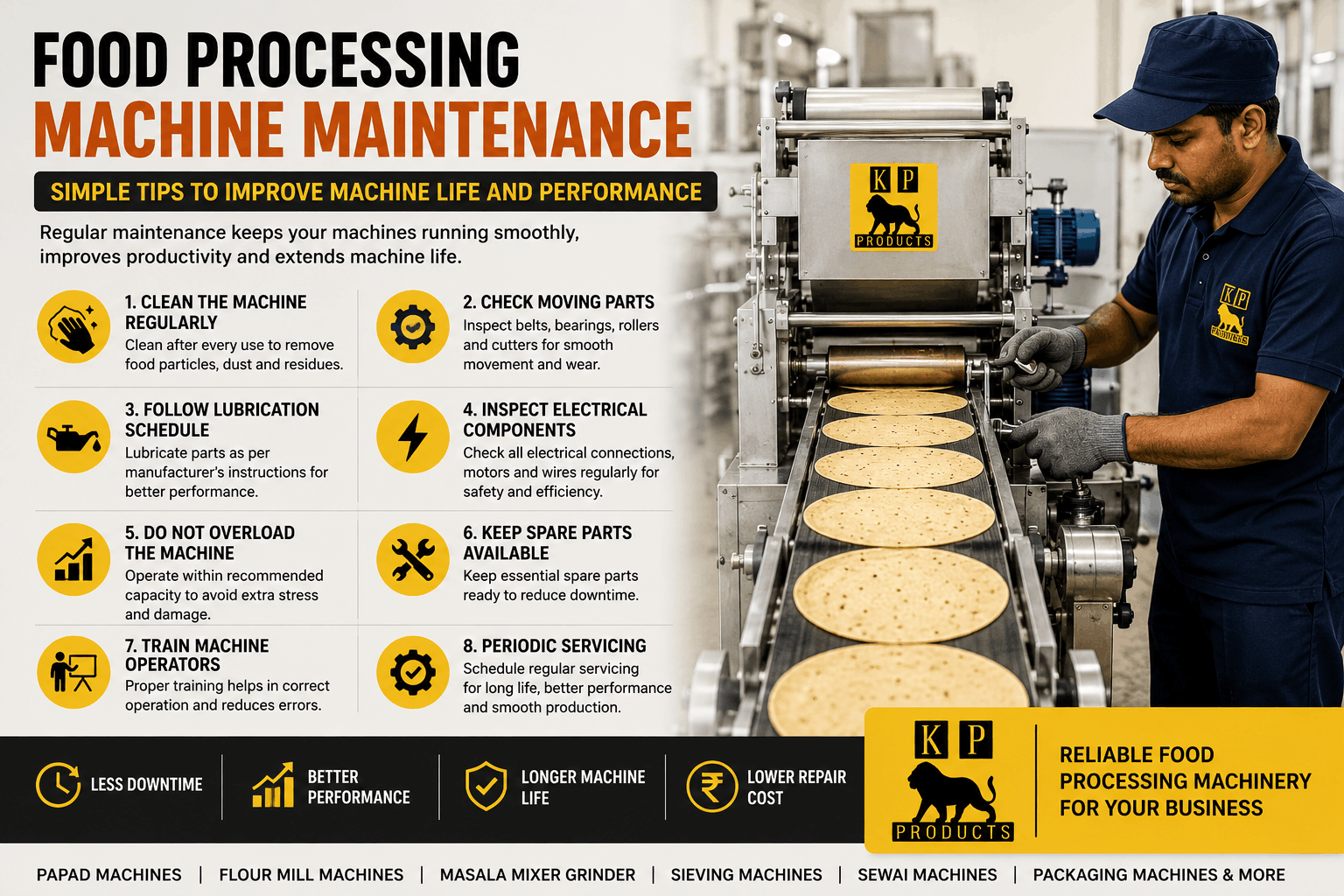
Step 1: Clean the Machine Regularly
Food particles, flour, spices and dough can accumulate around machine components during regular production.
Clean the machine after use and pay attention to:
- Food-contact surfaces
- Rollers and cutters
- Mixing areas
- Conveyors
- Sieving sections
- External machine surfaces
Use appropriate cleaning methods recommended for your specific machine and avoid damaging electrical or sensitive components.
Step 2: Check Moving Parts
Machines such as papad machines, masala mixers, flour mills and crushers contain moving components that require regular inspection.
Check for:
- Unusual noise
- Excessive vibration
- Loose components
- Worn belts
- Bearing issues
- Irregular movement
Finding small problems early can help prevent larger production interruptions.
Step 3: Follow Proper Lubrication Practices
Some machine components require periodic lubrication to operate smoothly. However, lubrication should be done according to the manufacturer's instructions.
Use the recommended lubricant and avoid applying excessive lubricant near food-contact areas.
A proper maintenance schedule should clearly mention which components require lubrication and how frequently they should be checked.
Step 4: Inspect Electrical Components
Electrical connections should also be checked regularly.
Look for signs such as:
- Loose connections
- Damaged cables
- Overheating
- Unusual electrical sounds
- Motor performance issues
Electrical maintenance should be handled by a qualified technician whenever required.
Step 5: Don't Overload the Machine
Every food processing machine has a recommended production capacity. Operating continuously beyond the intended capacity can increase stress on components and affect performance.
For example, KP Products lists different capacities for its machines, including 500–800 kg/day for its fully automatic papad machine, 150–200 kg/day for its semi-automatic papad machine, and 50–100 kg/hr for its masala mixer grinder.
Always operate the machine according to its specifications.
Step 6: Keep Spare Parts Available
Having commonly required spare parts available can help reduce downtime when maintenance is needed.
Before purchasing a machine, ask the manufacturer about:
- Spare parts availability
- Warranty
- Technical support
- Maintenance procedure
- Installation and operator training
KP Products states that it provides a one-year warranty and lifetime spares support for its machines.
Step 7: Train Machine Operators
Correct operation is an important part of machine maintenance. Operators should understand the machine's controls, capacity, cleaning procedure and basic safety practices.
Proper training can also help prevent problems caused by incorrect operation.
KP Products states that it provides installation and operator training as part of its support.